

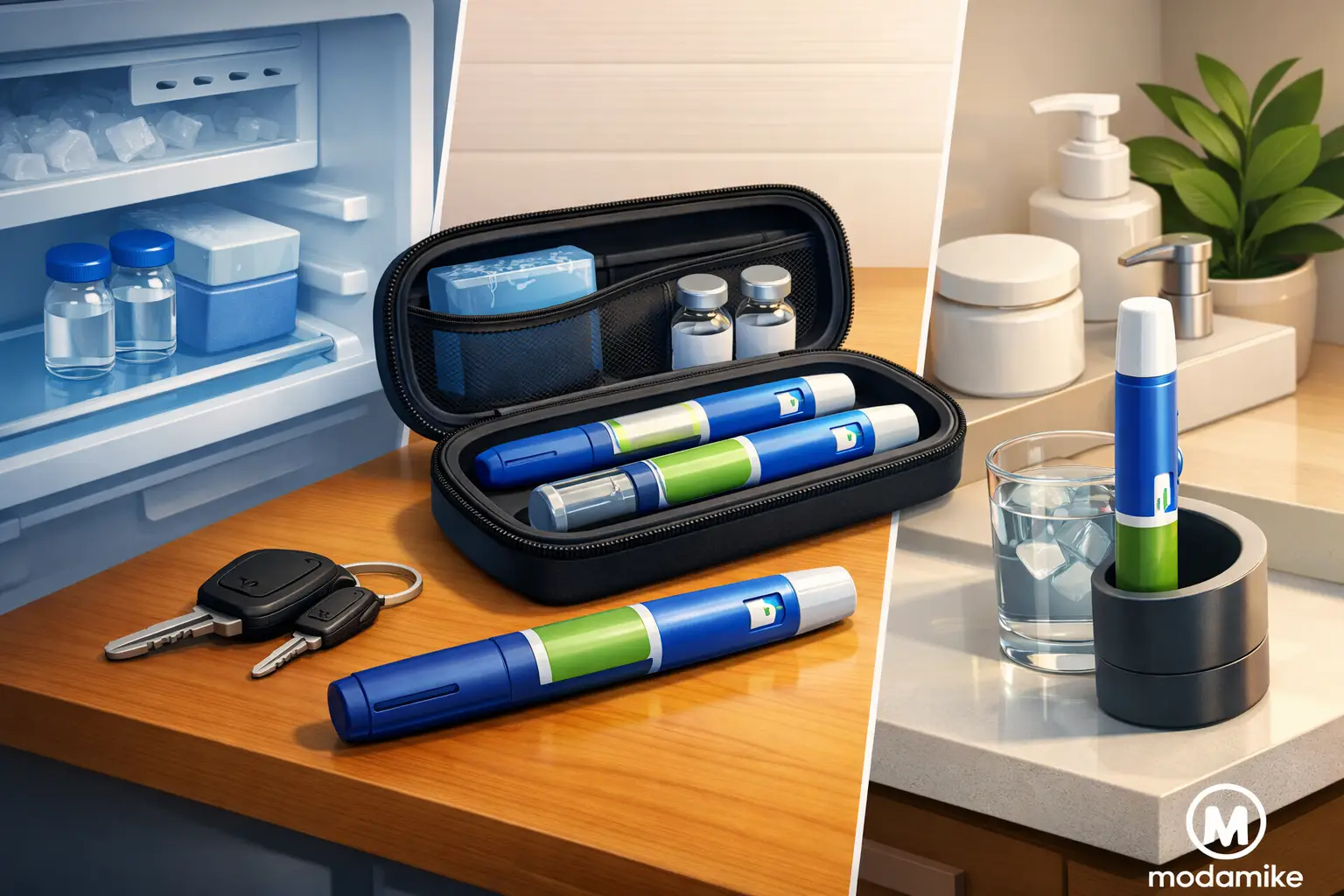
A semaglutide pen is not something to leave on the bathroom counter, in a hot car, or loose in a freezer-prone refrigerator. This semaglutide pen storage guide covers the practical details that protect the medication between delivery day and injection day - without turning your fridge into a pharmacy lab.
The short version: keep the pen at the temperature stated on its product label, protect it from light, never freeze it, and track when it was first used. Those four habits prevent most avoidable storage mistakes.
Start With Your Pen’s Own Label
Not every semaglutide pen has the same storage window. The exact rules can vary by manufacturer, formulation, whether the pen is single-use or multi-dose, and whether it has been used. Generic pens may also come with packaging instructions that differ from the brand-name products people recognize.
Read the carton, pen label, and enclosed instructions before putting anything away. The manufacturer’s directions are the final word on refrigeration range, room-temperature limits, and how many days the pen remains usable after first use or after being removed from the refrigerator.
Do not assume that a familiar-looking pen follows the same rules as another semaglutide product. A pen made for weekly injections may have different limits than a single-dose device. If the instructions are missing, damaged, or unclear, do not guess. Contact the supplier or a pharmacist before using the medication.
Semaglutide Pen Storage Guide: Before First Use
For many semaglutide pens, unopened medication is stored refrigerated. A typical target range is 36°F to 46°F (2°C to 8°C), but the product label controls. Keep the pen in its original carton so it is protected from direct light and so the storage instructions stay with the medication.
The best spot is usually the middle shelf of the refrigerator, toward the back but not pressed against the rear wall. Refrigerator doors swing through warmer temperatures every time they open. The back wall can run cold enough to freeze medication in some models. Both spots create unnecessary risk.
Never place a semaglutide pen in the freezer. Freezing can damage the medication even after it thaws. Avoid ice packs resting directly against the pen for the same reason. If your refrigerator tends to freeze produce or beverages near the back, move the pen to a more stable section and consider using a small refrigerator thermometer.
Keep the cap on until you are ready to use the pen. The cap helps protect the pen from light and physical damage. Do not store it with a needle attached unless the specific instructions say otherwise. Leaving a needle attached can increase the chance of leaking, contamination, or air entering the pen.
After First Use: The Calendar Matters
The day you first use a multi-dose pen is the day storage gets more specific. Depending on the product, an in-use pen may be allowed to remain refrigerated, held at controlled room temperature, or stored using either method for a limited number of days.
Write the first-use date directly on the carton or place a dated note beside it. A phone reminder works too, but a visible date on the box is harder to overlook when you are rushing before work or packing for a trip. Do not rely on memory, especially if more than one person in the household uses injectable medication.
Room temperature does not mean any temperature inside your home is fine. It means the range specified by the manufacturer, often below a stated maximum. A sunny windowsill, bathroom shelf, kitchen counter beside the stove, or gym bag in a parked car can exceed that limit quickly.
Once a pen has reached its labeled beyond-use date after opening, discard it even if medication remains. The liquid may still look normal, but appearance alone cannot confirm that potency and sterility are intact.
Heat, Freezing, and Light: The Three Problems to Avoid
Semaglutide is a peptide medication. Peptide medicines can be sensitive to temperature extremes and rough handling. You do not need to baby the pen, but you do need to avoid the predictable mistakes.
Heat is the most common issue during delivery, travel, and summer errands. Do not leave the package in a mailbox, on a porch, or in a vehicle longer than necessary. Bring it inside promptly and check the supplied instructions before moving it to refrigeration. If the shipment arrived warm, damaged, or with signs that the pen was exposed to extreme conditions, keep the packaging and contact the seller before using it.
Freezing is not a shortcut for long-term storage. A pen that has frozen, been stored against a freezer element, or developed ice crystals should not be used unless the manufacturer specifically confirms it remains acceptable. Do not try to “fix” a frozen pen by thawing it slowly.
Light exposure is less dramatic but still avoidable. The original carton is simple protection. Leave the pen boxed when it is not in use, particularly if it will be sitting out during a short trip or waiting in a refrigerator with a bright interior light.
What to Check Before an Injection
Before each dose, inspect the pen and the liquid through its viewing window if the device has one. Semaglutide solution is commonly clear and colorless, but your own product insert should describe its expected appearance.
Do not use the pen if the liquid looks cloudy, discolored, unusually thick, or full of particles, unless the manufacturer’s instructions specifically say that appearance is normal. Also stop and get advice if the pen is cracked, leaking, has been dropped hard, or has a damaged cap or dose mechanism.
If the pen was cold from the refrigerator, follow the product instructions on handling before injection. Some users find an injection more comfortable after allowing the pen to warm briefly at room temperature, but do not use a microwave, hot water, heating pad, or direct sunlight to speed that up. Forced heating is a bad trade.
Travel Without Taking Chances
Travel is manageable when you plan the temperature control before you leave. Use an insulated medication travel case for short trips, with cooling packs positioned so they do not touch the pen directly. A cloth barrier inside the case can help prevent accidental freezing.
For air travel, keep the pen in your carry-on bag. Checked luggage can face extreme temperatures and long delays. Keep it in the original labeled packaging when possible, along with any documentation you may need for security or customs. International rules vary, so check the destination requirements before departure.
For road trips, bring the pen inside with you at every stop. A car can become far hotter or colder than the outdoor temperature. The glove box, center console, and trunk are poor storage choices. If your hotel room has a minibar refrigerator, do not assume it is safe: many run too cold or freeze items near the back.
If your product is permitted to stay at room temperature for a labeled period, travel may be simpler. That does not remove the need to protect it from direct sun, heat, and freezing conditions.
If Something Went Wrong
A pen left out overnight is not automatically ruined, and a pen that feels cool is not automatically safe. The answer depends on your specific product’s room-temperature allowance, the estimated temperature, and the time involved.
Start by checking the manufacturer’s storage directions. Record what happened: how long the pen was out, whether it was in direct sun, whether it may have frozen, and whether it has already been used. Then contact the manufacturer, pharmacy, or supplier for product-specific guidance. Do not inject first and ask later when there is a credible storage concern.
Avoid using a pen that was definitely frozen, exposed to high heat for an unknown duration, visibly damaged, expired, or past its post-opening use date. Replacing medication is frustrating. Using compromised medication is the worse gamble.
Disposal and Privacy at Home
Used needles belong in a proper sharps container, not a loose trash bag. If you do not have a commercial sharps container, use a heavy-duty puncture-resistant container with a secure lid where allowed by local rules. Keep all pens and needles out of reach of children and pets.
Before disposing of cartons or labels, remove or cover personal information if privacy matters in your household. Keep the medication itself stored discreetly, but do not hide it somewhere warm, damp, or easy to forget.
A good storage routine takes less than a minute: carton on a stable refrigerator shelf, first-use date clearly marked, cap protected, and no needle left attached. That small routine gives your semaglutide pen the best chance of being ready when you are.